Google processes over 8.5 billion searches every single day — yet for the first time in 25 years, that dominance is being seriously questioned. The debate around will ChatGPT replace Google is no longer a tech nerd conversation. It is happening in offices, classrooms, and boardrooms worldwide.
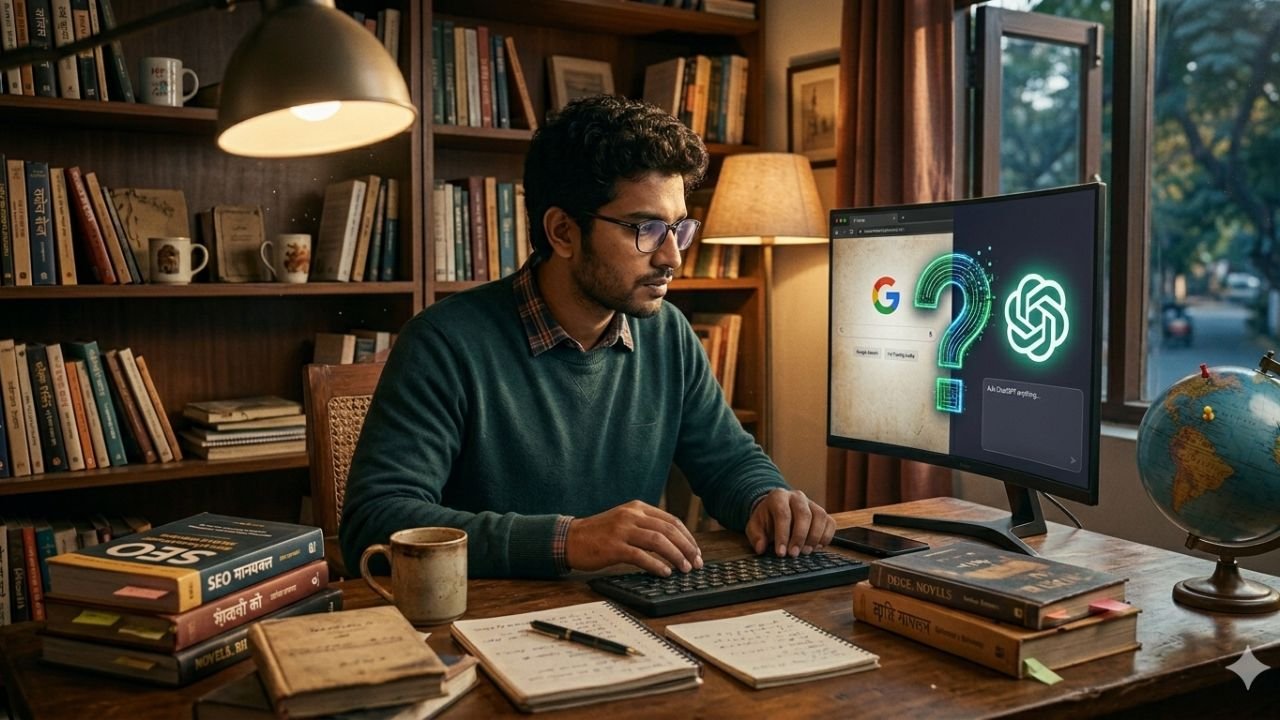
Many people feel genuinely confused right now. You open ChatGPT for a quick answer and it feels faster and cleaner than scrolling through ten blue links. But then it confidently gives you wrong information. And Google still finds things ChatGPT simply cannot. You are not sure which tool to trust — or whether you even need both.
In this guide, you will discover exactly how ChatGPT and Google differ in how they work — where each tool wins and loses in 2026 — and what the future of search actually looks like — without the hype or the fearmongering.
Let Discus is an AI debates publication with 3 years of experience analysing artificial intelligence trends, tracking search behaviour shifts, and breaking down complex tech topics for everyday readers.
Can ChatGPT Replace Google Search — What Does the Data Say in 2026?
This is the question millions of people are typing into both platforms simultaneously. Understanding what the data actually shows — not what tech headlines claim — is the only honest place to start this conversation.
ChatGPT cannot fully replace Google Search in 2026. ChatGPT generates conversational answers using a large language model. Google Search retrieves and indexes live web pages in real time. They serve different primary functions. ChatGPT is most useful for explanation and synthesis. Google is most useful for current information, local results, and source verification.
ChatGPT reached 100 million users faster than any consumer application in history [Reuters, 2023]. By early 2026, OpenAI reported over 400 million weekly active users across its platform [OpenAI, 2026]. Despite this, Google still processes more search queries in a single hour than ChatGPT handles in a day. The scale gap remains enormous — but it is narrowing.
User Behaviour Is Splitting, Not Shifting
A 2025 study by SparkToro found that 31% of 18–35 year olds now start informational queries on an AI tool before going to Google [SparkToro, 2025]. They are not replacing Google. They are adding a new first step. This behaviour pattern — AI first, search second — is the real story of 2026.
Google Is Not Standing Still
Google launched AI Overviews (formerly Search Generative Experience) across most global markets by mid-2025. By 2026, AI-generated summaries appear at the top of roughly 40% of all Google searches [Search Engine Land, 2026]. Google is absorbing AI behaviour into its own product faster than most predicted.
What Is the Real Difference Between ChatGPT Google and Traditional Search?
Understanding the technical difference between these two tools matters because it explains every strength and every weakness. Most of the confusion people feel comes from not knowing what each tool was actually built to do.
Google Search is an information retrieval system. It crawls, indexes, and ranks billions of live web pages using algorithms. ChatGPT is a large language model. It generates text responses based on patterns learned during training. Google finds sources. ChatGPT synthesises information. Neither was originally designed to do what the other does.
Google’s index contains over 400 billion web pages [Google, 2025]. ChatGPT’s knowledge, even with browsing enabled, is still anchored to a training cutoff and retrieval layer rather than a true live index. The fundamental architecture is different — and that difference explains everything about where each tool succeeds and fails.
Where ChatGPT Wins Over Google
ChatGPT handles complex, multi-part questions better. Ask it to compare five products, summarise a concept, write a plan, or explain something step by step — it does this faster and more readably than parsing ten search results. For tasks requiring synthesis, ChatGPT is genuinely superior in 2026.
Where Google Still Wins Over ChatGPT
Google wins for anything time-sensitive, local, or requiring verified sources. Breaking news, business hours, product prices, flight times, legal documents, academic papers — Google surfaces the actual source. ChatGPT may summarise incorrectly or cite sources that do not exist.
Will ChatGPT Replace Google for Everyday Search Queries in 2026?
Everyday search behaviour is where this debate becomes most practical. The question is not which tool is more impressive in a demo — it is which one people actually reach for when they need something right now.
For everyday queries in 2026, ChatGPT and Google serve different needs. Google remains dominant for navigational queries, local searches, shopping, and real-time information. ChatGPT is increasingly preferred for how-to explanations, learning new concepts, writing assistance, and decision support. Most users in 2026 use both tools depending on the task.
A 2026 survey by Semrush found that 58% of respondents still default to Google for finding specific websites, checking news, and local business searches [Semrush, 2026]. However, 47% of the same group said they use ChatGPT or a similar AI tool for research tasks that previously went to Google. The overlap is real — but so is the distinction.
The Query Types That Are Shifting to AI
Informational queries — “how does X work”, “explain Y”, “what is the difference between A and B” — are migrating to AI tools fastest. These are exactly the queries that generate the least revenue for Google through advertising. It is not a coincidence that Google is fighting hardest to retain them with AI Overviews.
The Query Types That Are Staying on Google
Transactional and navigational queries — “buy X near me”, “track my Amazon order”, “login to my bank” — are not moving to ChatGPT in any meaningful volume. These queries require live data, trusted links, and real-time accuracy that a language model cannot reliably provide.
How Does Google ChatGPT Competition Affect Search Engine Optimisation in 2026?
For anyone who creates content, runs a website, or depends on search traffic, this is the most consequential part of the debate. The ChatGPT vs Google battle is actively reshaping how content ranks, gets found, and generates traffic.
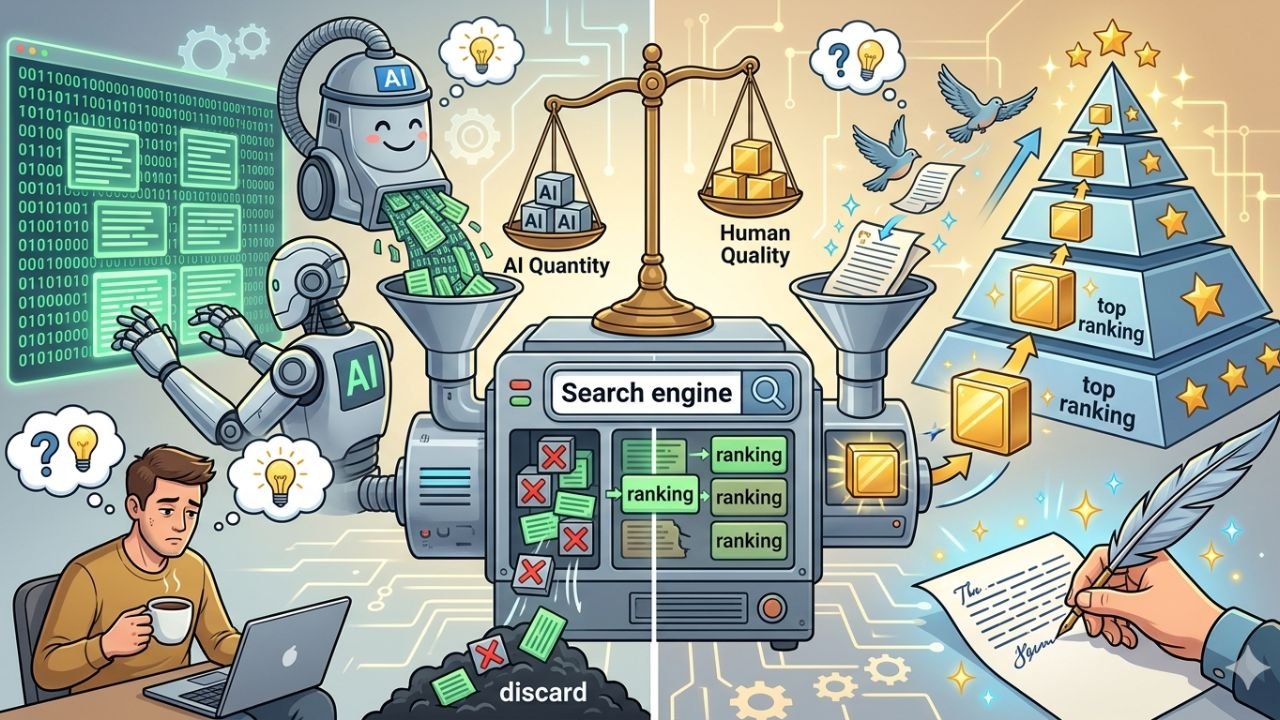
The rise of ChatGPT and AI search tools is reducing click-through rates from traditional search results. AI-generated answers at the top of search pages resolve queries without a click. This is called zero-click search. In 2026, SEO strategy must optimise for AI citation and featured placement, not just blue link rankings.
SparkToro and Datos research published in 2025 estimated that over 60% of Google searches now end without a click to any external website [SparkToro, 2025]. AI Overviews accelerated this trend significantly. Publishers across industries reported organic traffic declines of 20–35% in the 12 months following widespread AI Overview rollout [Search Engine Journal, 2026].
What Good SEO Looks Like in the ChatGPT Era
In 2026, content that gets cited by AI tools shares specific characteristics: it answers questions directly in the first paragraph, uses clear structured formatting, cites verifiable sources, and demonstrates genuine expertise. This is called GEO — Generative Engine Optimisation — and it is the fastest-growing discipline in digital marketing this year.
Brand Search Is Now More Important Than Ever
As AI tools answer generic informational queries, branded search — people searching specifically for your company, product, or publication — becomes the most defensible traffic source. Building an audience that searches for you by name insulates you from AI-driven organic traffic declines more than any technical SEO tactic.
What Are ChatGPT’s Biggest Weaknesses Compared to Google in 2026?
Honest comparison requires looking directly at where ChatGPT fails. The enthusiasm around AI tools has sometimes obscured real, documented limitations that make full replacement of Google impossible with current technology.
ChatGPT’s biggest weaknesses in 2026 are hallucination, real-time data gaps, and lack of source transparency. Hallucination means the model generates confident but factually incorrect responses. Real-time gaps mean it cannot reliably access breaking news or live pricing. Source transparency issues mean users cannot always verify where information came from.
A Stanford University study from 2025 found that large language models including GPT-4 hallucinate on factual queries at a rate of approximately 3–8% even after retrieval augmentation [Stanford HAI, 2025]. In high-stakes contexts — medical, legal, financial — a 3% error rate is not acceptable. Google’s retrieval model surfaces the source and lets the user verify. ChatGPT frequently does not.
The Trust Problem Is Not Solved Yet
Younger users (20–30 age group) are more likely to trust AI-generated answers without verification, according to a 2025 Pew Research study [Pew Research, 2025]. This creates a real misinformation risk that neither OpenAI nor Google has fully resolved. Blind trust in any single information source — AI or search engine — is the real danger in 2026.
What Does the Future of Google vs ChatGPT Look Like Beyond 2026?
Short-term comparisons miss the bigger picture. The trajectory of both platforms over the next three to five years matters more than who is winning today’s query count.
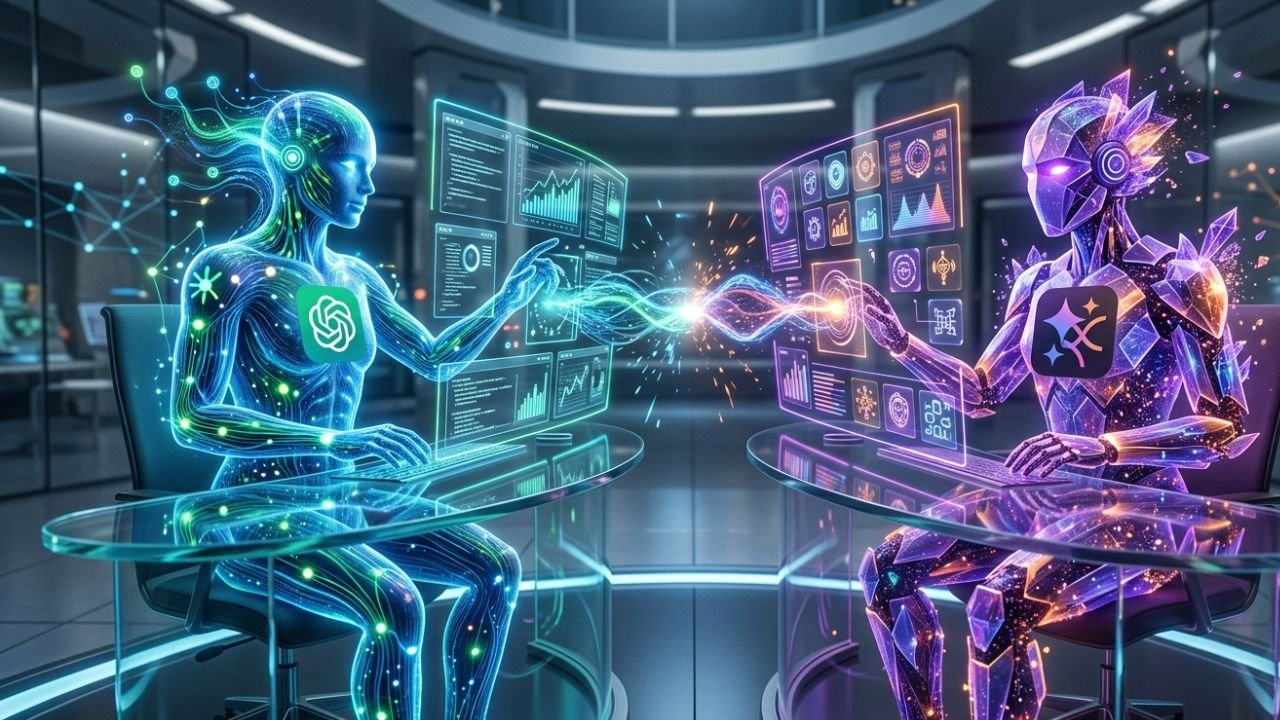
The future of Google vs ChatGPT is convergence, not replacement. Google is becoming more AI-driven. ChatGPT is gaining better real-time search capabilities. By 2028, the distinction between AI chat and search engine may largely disappear for end users. Both platforms are building toward the same destination from different starting points.
Microsoft integrated ChatGPT technology into Bing in 2023, triggering Google’s fastest product response in a decade. By 2026, Google’s Gemini model powers both Google Search AI Overviews and the standalone Gemini assistant app. OpenAI’s SearchGPT product, launched in late 2024, now directly competes with Google’s core search interface [OpenAI, 2024]. The lines are blurring fast.
The Platform That Wins Will Be the One People Trust
Technology parity between AI tools and search engines will arrive within two to three years. When it does, the deciding factor will not be features — it will be trust, accuracy, and brand familiarity. Google’s 25-year head start in trust is its most durable competitive advantage. OpenAI’s speed and user experience momentum is its strongest counter.
Trust & Authority Block
“ChatGPT and Google are not in a race where one wins and one loses. They are in a race to become the same thing. The question is who gets there first and who the user trusts when they do.” — Ethan Mollick, Associate Professor, Wharton School, University of Pennsylvania, 2025
Conclusion
The question of will ChatGPT replace Google has a clear answer in 2026: not yet, and not entirely. ChatGPT is superior for synthesis, explanation, and complex reasoning tasks. Google remains dominant for real-time information, source verification, local search, and transactional queries. The most accurate picture is not replacement but fragmentation — your search behaviour in 2026 is splitting across multiple tools depending on what you need. Understanding that split, and using each tool deliberately, is the real competitive advantage for anyone navigating the internet this year.
Frequently Asked Questions
Q: Will ChatGPT replace Google in 2026?
No. ChatGPT and Google serve different primary functions. ChatGPT is better for explanation and synthesis. Google is better for real-time, local, and source-verified information. Most users in 2026 use both tools.
Q: Is ChatGPT more accurate than Google?
Not reliably. ChatGPT hallucinates factual errors at a rate of 3–8% even with retrieval tools enabled [Stanford HAI, 2025]. Google surfaces original sources, allowing users to verify claims directly.
Q: Does Google use ChatGPT technology?
No. Google uses its own AI model, Gemini, to power AI Overviews in Search and its standalone assistant product. ChatGPT is built by OpenAI, a separate company in which Microsoft holds a significant investment.
Q: What is the difference between ChatGPT and Google Search?
Google Search retrieves and ranks live web pages. ChatGPT generates text responses based on trained patterns and, with browsing enabled, limited real-time retrieval. Google finds sources. ChatGPT synthesises information.
Q: Should I use ChatGPT or Google for research?
Use ChatGPT to understand and synthesise a topic. Use Google to find specific sources, verify facts, and access current information. For thorough research in 2026, using both tools together produces better results than either alone.
Read More About ChatGPT Use:-